
Laser Therapy
Why laser therapy?
Fits into your treatment plan
Laser therapy isn't necessarily a treatment you have instead of everything else. It can be a valuable addition to the treatments we already use at FootSense Podiatry. Depending on your condition, this may include exercises, stretching, footwear changes, orthotics, offloading, manual therapy, or other podiatric treatments.
Your Feet. Our Technology. Your Recovery.
At FootSense Podiatry, we're always looking for better ways to help our patients move more comfortably and get back to doing the things they enjoy. Advanced laser therapy gives us another tool in our treatment toolbox — allowing us to provide targeted, non-invasive treatment for a wide range of conditions. Don't let foot pain hold you back. Talk to our team at FootSense Podiatry to find out whether laser therapy could be suitable for you.
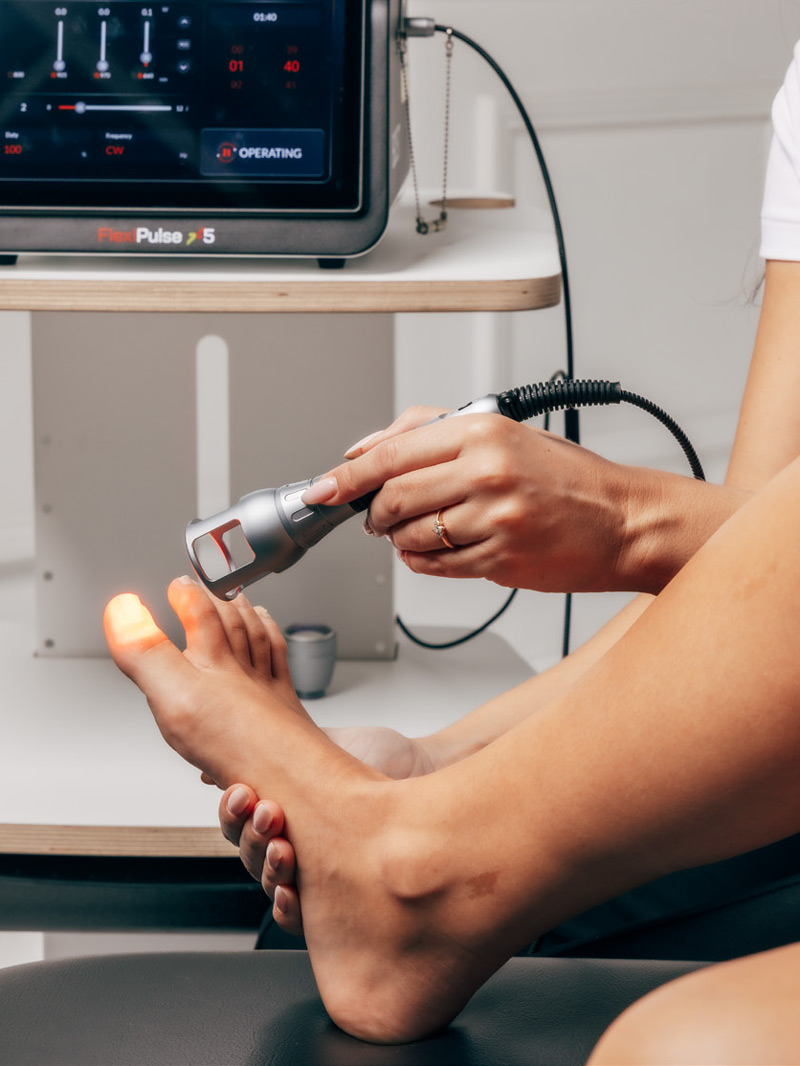
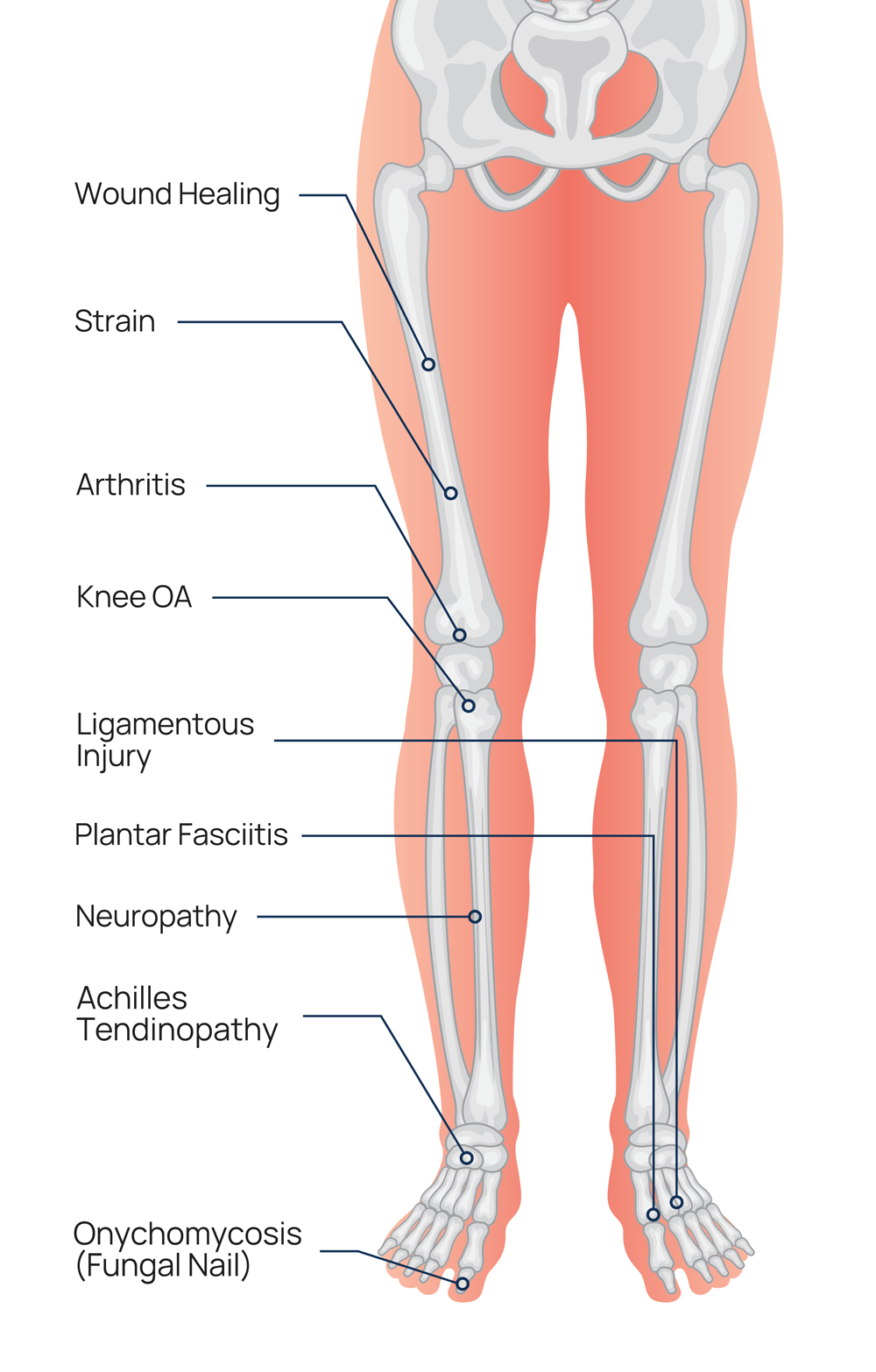
What conditions benefit from laser therapy?
- Achilles & Tendon Problems
For irritated, overloaded or injured tendons, laser therapy may help reduce discomfort and support the recovery process. It can be particularly useful as part of a broader rehabilitation programme. - Sports & Soft-Tissue Injuries
From muscle strains and ligament injuries to general sporting aches and pains, laser therapy can be used to support recovery and help you return to activity.
- Arthritis & Joint Pain
Laser therapy may help reduce pain and stiffness around painful joints, making movement and rehabilitation more comfortable. It can be used for conditions affecting the foot, ankle and other areas of the lower limb. - Acute & Ongoing Pain
Whether your pain is relatively new or something you’ve been dealing with for months, laser therapy may provide another way of managing discomfort and supporting recovery. - Muscle Pain & Tightness
Laser therapy can be used to target painful or tight muscles and may help promote relaxation and improve comfort. - Nerve-Related Pain
Laser therapy may also be used as part of a treatment programme for certain nerve-related symptoms, with treatment tailored to the individual. - Wound & Tissue Recovery
In appropriate situations, laser therapy can be used alongside wound care to support the body’s natural healing processes. Your podiatrist will determine whether laser therapy is appropriate for your particular wound or condition. - Fungal Toenails
Laser therapy is another treatment option that may be considered for fungal toenails. Treatment is usually combined with appropriate nail care and an overall fungal nail management programme.
Frequently asked questions
What is laser therapy?
Laser therapy uses light energy to help your body work better at a cellular level. The light is absorbed by the cells’ power center and turned into energy, which helps them repair, rebuild, and function more effectively.
Because of this special photobiomodulation or PBM light, the laser is able to pass through the skin and reaches the muscles and joints, waking up the cells underneath.
This process can heal the affected area by reducing swelling, reduce pain, and speeding up healing.
How often should I get treated?
A full course of 4-6 treatments is recommended, with monthly maintenance or occasional top-ups for chronic or degenerative conditions like arthritis and neuropathy to support sustained relief.
What does laser therapy feel like?
Most patients describe the treatment as warm, soothing, and completely painless.
Does laser therapy hurt?
PBMT is a gentle, non-invasive treatment for musculoskeletal pain and inflammation. It’s painless and has no known adverse side effects.
Top biological effects of laser therapy
Analgesic effect
Laser therapy targets diseased and damaged tissue by calming hypersensitive nociceptors, stabilising membrane firing thresholds, and boosting tissue endorphin release. Along with reducing inflammation, this leads to a noticeable decrease in pain perception for patients.
Decreased inflammation and swelling
Laser therapy reduces inflammation through several mechanisms especially via the reduction of pro-inflammatory mediators. Facilitating lymphatic drainage can significantly reduce swelling as well. As a result, inflammation, erythema, bruising, and oedema are reduced.
Improved vascular activity
Laser light stimulates the formation of new capillaries in damaged tissue, enhancing blood flow to areas with restricted circulation.
Accelerated tissue repair and cell growth
Photons of laser light penetrate deep into tissue, accelerating cellular growth and reproduction. This increases the energy available to cells, helping them absorb nutrients and expel waste more efficiently.
Improved nerve function
slow recovery of nerve function in damaged tissue can lead to numbness and impaired limb movement. Laser therapy speeds up the regeneration of nerve cells, promoting faster recovery.
Trigger points and acupuncture points
Laser therapy targets muscle trigger and acupuncture points without the need for mechanical intervention, helping to alleviate musculoskeletal pain.
Immunoregulation
Therapy laser photons influence the immune system by modulating the immune response, affecting its overall status.
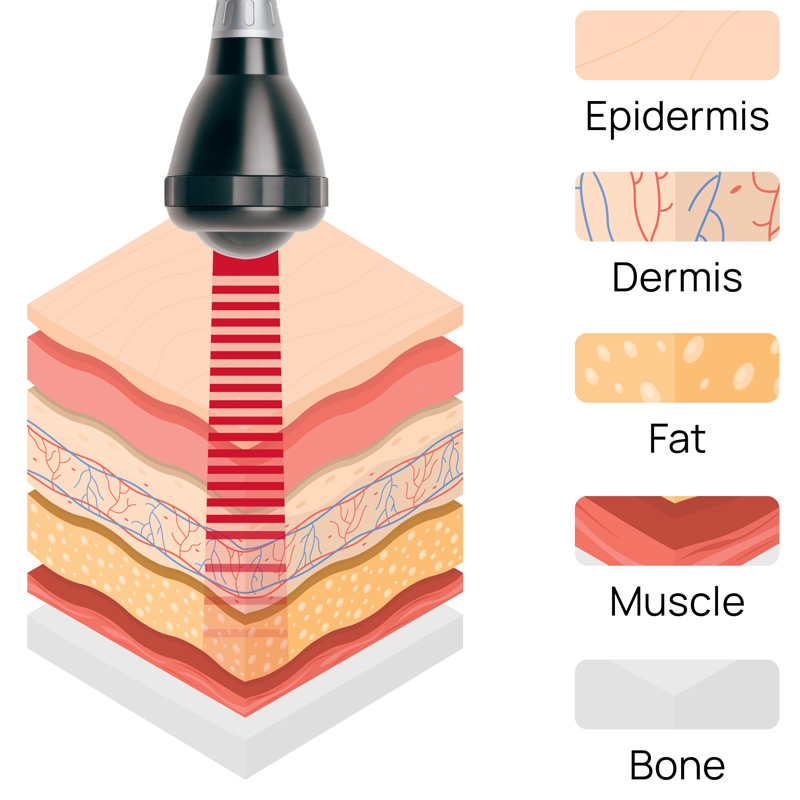
Different wavelengths. Different depths.
One versatile treatment approach.
Not all tissues in your body respond to light in the same way. That is why advanced multi-wavelength laser therapy uses different wavelengths of light to target tissues at varying depths and support the body’s natural healing processes.
445nm
- Powerful antibacterial action
- Reduces superficial inflammation
- Accelerates surface healing
- Ideal for wound care & infection control
660nm
- Accelerates surface healing
- Increases cellular regeneration
- Reduces antibiotic usage
- Shortens healing time
810nm
- Accelerates cellular metabolism
- Deepest tissue penetration
- Stimulates immune system
905nm
- Fast pain reduction
- Stimulates nerve regeneration
- Anti-inflammatory effects
970nm
- Improves circulation
- Pain relief
- Decreases morbidity
- Faster recovery
1064nm
- Ideal for deep muscle and joint pain
- Reduces chronic inflammation
- Promotes long-term tissue repair
How can we help?
If you’re interested in Onyfix, elder foot care, reduction of nail thickness, corns and callus removal, verruca needling, ingrown toenail surgery, a diabetic foot assessment, biomechanical assessment, custom or prefabricated orthotics, or high-power laser for healing, tissue regeneration and more – we’d like to help.
Book Now